Business Rates Reform: Suffolk Businesses Raise Concerns (2026 Survey)
Helping you navigate rising costs and influence change
In early 2026, Suffolk Chamber surveyed local businesses to understand how upcoming changes to the business rates system are affecting our members.
This research was carried out following the publication of new property valuations by the Valuation Office Agency (November 2025) and ahead of the introduction of new business rates multipliers in April 2026.
The survey shows that both revaluations and multipliers have been poorly received, particularly by SMEs, and that Suffolk businesses do not believe the new system delivers sufficient certainty or clarity.
Respondents would favour reforms that improve fairness, predictability, and smoother transitions between revaluations, with many being open to alternate business rates models based on ability to pay.
The message from Suffolk businesses is clear: business rates are a growing barrier to investment, confidence, and growth.
📊Headline Impacts
Rising Costs
78% of businesses expect their business rates bill to increase from April 2026, with 73% of those anticipating a significant impact on their operations.
Reduced Investment
62% say the changes have reduced their likelihood of investing, and none expect to increase investment as a result.
Negative Sentiment
76% feel negative about the new multipliers, while 68% feel negative about the revaluation process.
🧱 System Challenges
Unfit System
No respondents believe the current method of calculating rateable values is fit for purpose, highlighting a clear need for reform.
Lack of Certainty
Businesses report that the system lacks predictability and clarity, making it difficult to plan and invest with confidence.
Cliff Edges
Only 16% say that changes in thresholds ("cliff edges") would not affect investment decisions, showing widespread concern about sudden cost increases.
🏦 Views on Reform
'Slice' System
The proposed 'slice' model receives mixed views:
- 27% support
- 22% oppose
- 51% are unsure
Concerns focus on added complexity and potential cost increases.
Ability-to-Pay Models
Approaches based on turnover or profit gain more support:
- 46% supportive
- 35% unsure
However, businesses remain divided on the best method.
Reliefs and Support
Over a third of businesses say current relief schemes do not effectively support investment, with calls for better support for decarbonisation, SMEs, and key sectors such as hospitality and manufacturing.
Implications for Suffolk Businesses
The findings show that business rates are having a direct impact on investment decisions, growth plans, and business confidence across Suffolk.
For many businesses, particularly SMEs, rising costs and uncertainty are:
- Limiting the ability to invest and expand
- Creating challenges for long-term planning
- Increasing financial pressure at a time of wider economic strain
Without reform, there is a clear risk that business rates will continue to act as a barrier to growth and productivity.
What Suffolk Chamber is Doing
Suffolk Chamber is using this evidence to represent members’ views and push for meaningful reform.
We have:
- Submitted evidence to HM Treasury’s Call for Evidence on Business Rates (February 2026)
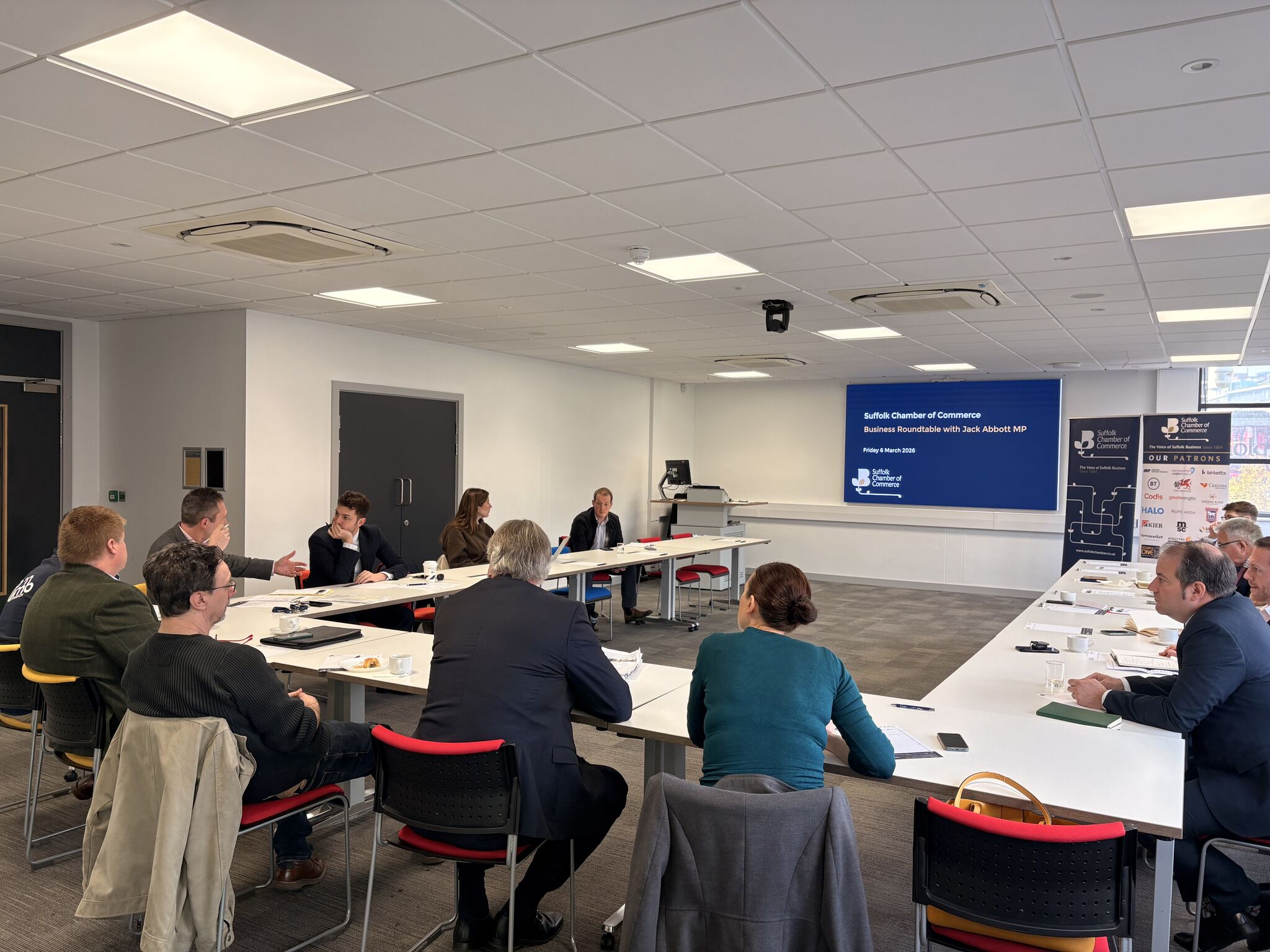
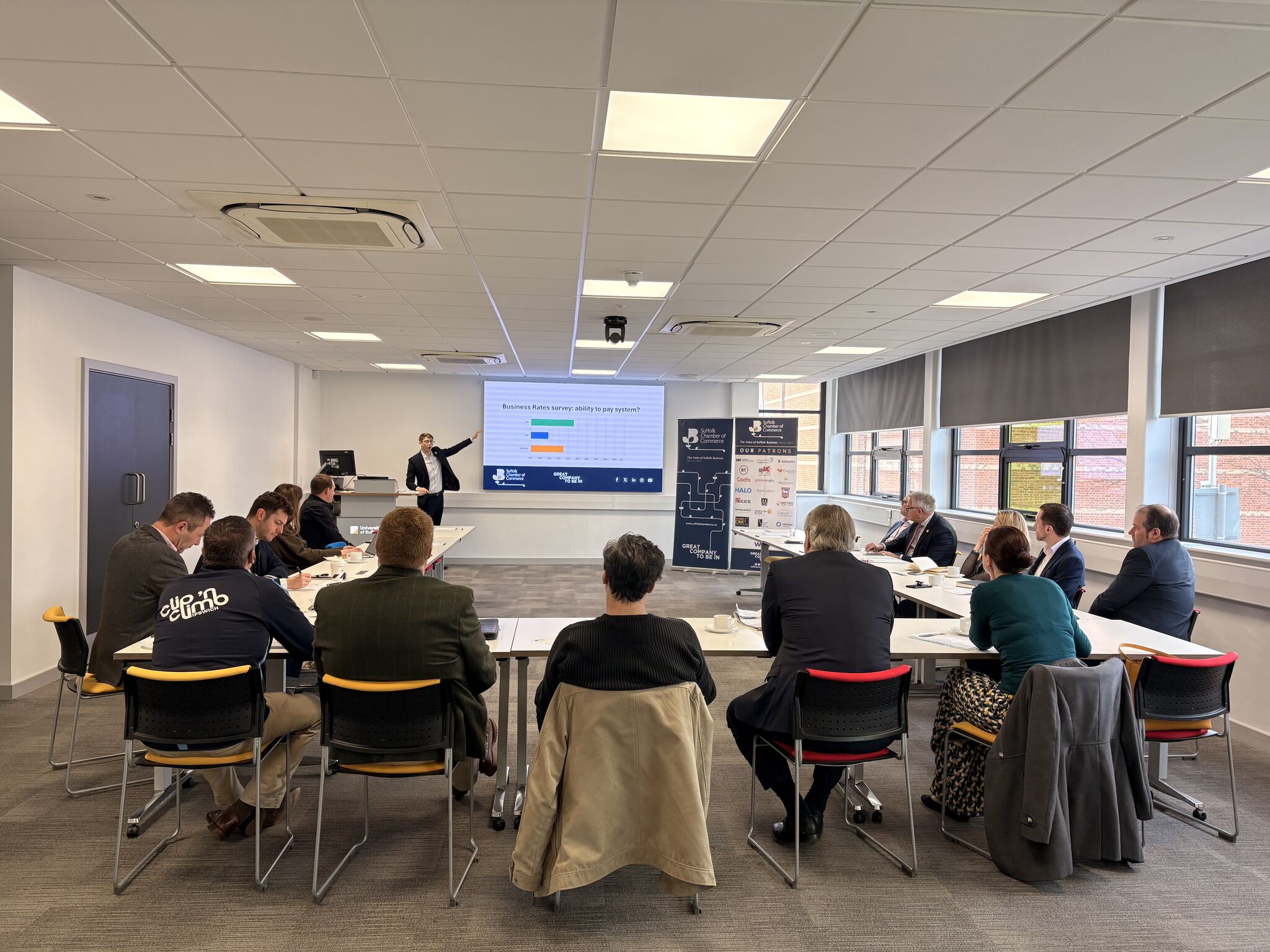
- Hosted a roundtable with Suffolk businesses and Jack Abbott MP (March 2026)
- Continued to engage with government, MPs and policymakers
We will continue to gather insight from businesses across Suffolk and engage with MPs, HMT and other stakeholders to advocate for reforms for a fairer, more predictable system that supports investment and growth.
📣 Have Your Say
Your voice strengthens our ability to influence change.
If you would like to share your experience of business rates or contribute to our ongoing work, please get in touch via [email protected].